The problem I wanted to solve
AI can change code quickly. That is not the same as knowing what changed, why it changed, whether it passed, and when a human should stop it.
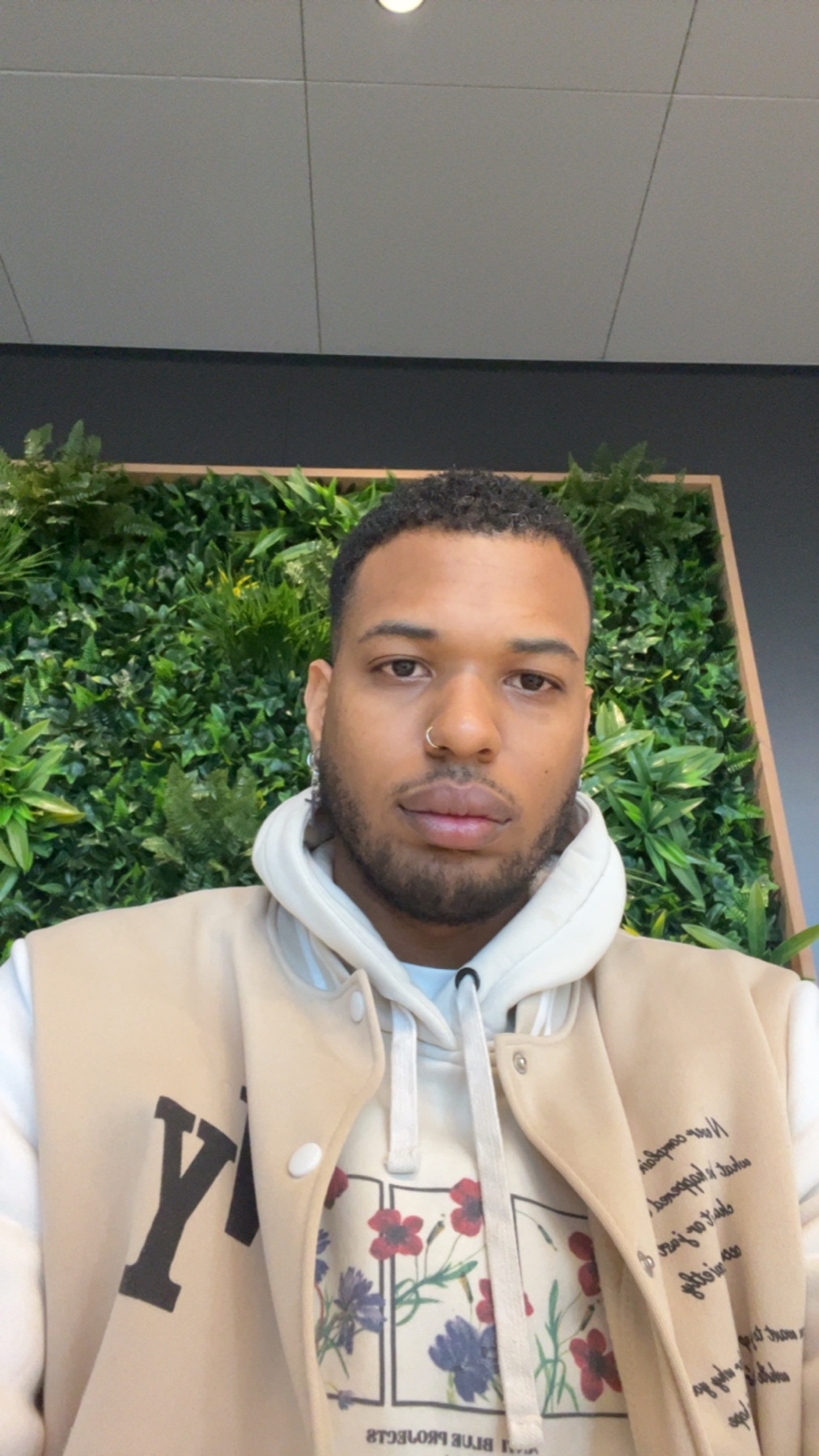
Software developer and systems specialist building practical AI products.
Years in support taught me where work actually breaks. Now I turn that experience into practical AI products with clear plans, human approval, and proof that the system did what it said.
Amsterdam, NL · Open to AI and product engineering roles
Scroll to inspect the proofsystems → product → AI
The person defines the outcome.
A reviewable plan is frozen first.
Work happens in an isolated Git worktree.
Checks and independent review leave receipts.
Working pre-release product · private repository
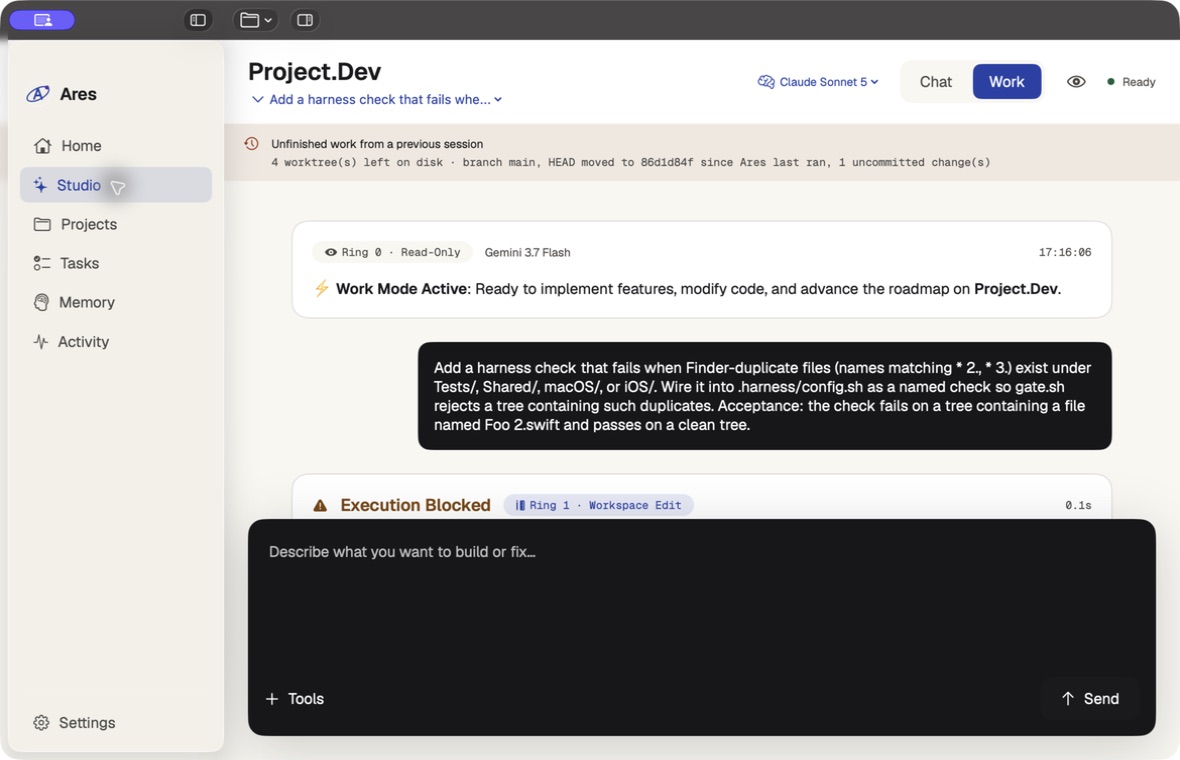
AI can change code quickly. That is not the same as knowing what changed, why it changed, whether it passed, and when a human should stop it.
Ares freezes the plan before execution, isolates the work, records commands and diffs, routes an independent review, and fails closed when proof is missing.
Plans require approval before mutation.
Commands, file changes, checks, and review become receipts.
Claude, Codex, Gemini, GitHub, and local Ollama adapters are routes, not the product.
Interrupted work can be inspected and resumed instead of disappearing into chat history.
I learn by building. These are short records of what I tried, why I tried it, what failed, and what I am taking into the next iteration.
Calling a product human in the loop means little if approval sits outside the real execution path. In Ares, the plan becomes an immutable checkpoint. That constraint made the interface clearer and the engineering more honest.
A polished answer can still be wrong. I am learning to treat tests, diffs, command results, reviewer findings, and explicit failure states as product features, not backend trivia.
The most useful agent systems do not hide the work. They choose a capable route, expose the tradeoff, and give the human a clean way to intervene. That is the standard I am building toward.
I know the distance between a promising demo and a tool people can rely on. My background is support, administration, documentation, migrations, and translating between technical systems and the people using them.
System administration and technical support across the Ministry of Finance in Suriname, SoftTech, freelance work, Change=, and igen placements at Sanquin and Rijkswaterstaat. I learned to diagnose clearly, communicate calmly, and improve the system around each incident.
NATINMBO level 4 · ICT Application Development · completed 2018, diploma issued Feb 2019
Inholland University of Applied SciencesBusiness IT & Management coursework · 2022 to 2024 · no degree claimed
Dutch and English · native proficiency / Italian · currently learning
I am looking for a team where I can combine systems thinking, product curiosity, and practical AI engineering, especially close to real users and real operational problems.